
Concrete Patio vs. Paver Patio: How to Choose for Your Backyard
Compare concrete patio vs. pavers for Pennsylvania yards, from drainage and seasonal cleanup to layout, finishes, upkeep, and questions to ask before choosing.
On this page
- Concrete patio vs. pavers: what is the main difference?
- How do Pennsylvania conditions affect the choice?
- Which surface fits your layout and style?
- What upkeep should you plan for?
- What affects the scope of a patio project?
- Questions to ask a concrete patio builder
- How patio planning with LVMC works
- Frequently Asked Questions
Choosing between a concrete patio and a paver patio starts with how you plan to use the space and which surface suits your yard. Concrete creates a continuous surface that can be plain or stamped; pavers use individual units arranged in patterns, with visible joints.
Pennsylvania’s freeze-thaw conditions, snow, humid summers, leaves, and pollen are all worth considering. Neither option is right for every site, so compare the layout, drainage, and care involved—not only the appearance.
Concrete patio vs. pavers: what is the main difference?
A concrete patio is formed as one continuous surface. You can choose a simple finish or a stamped concrete patio, where a pattern adds visual detail. The final look depends on the finish and how the patio relates to the house, paths, and landscape.
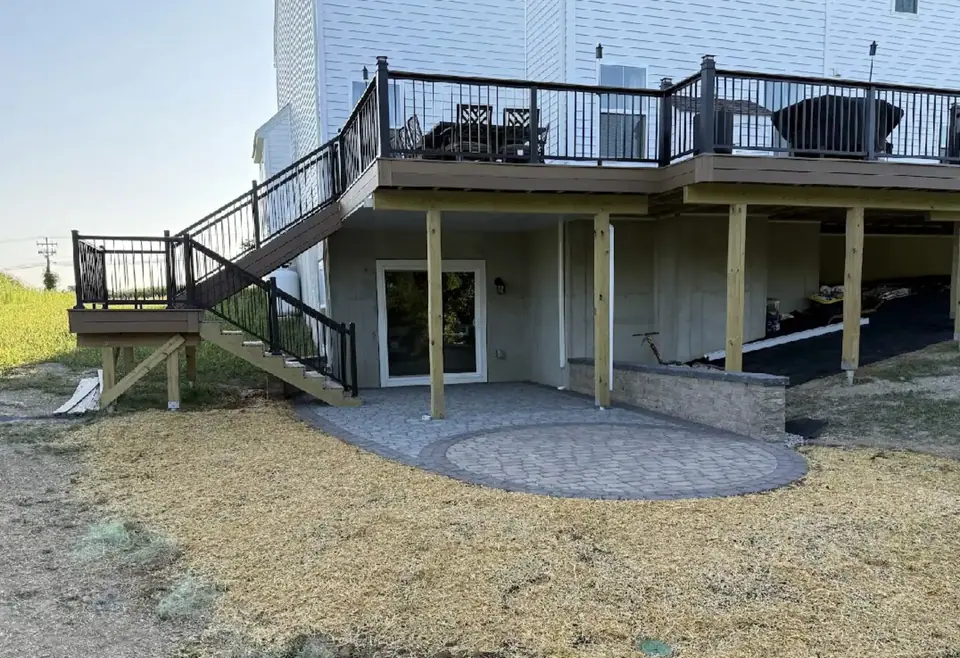
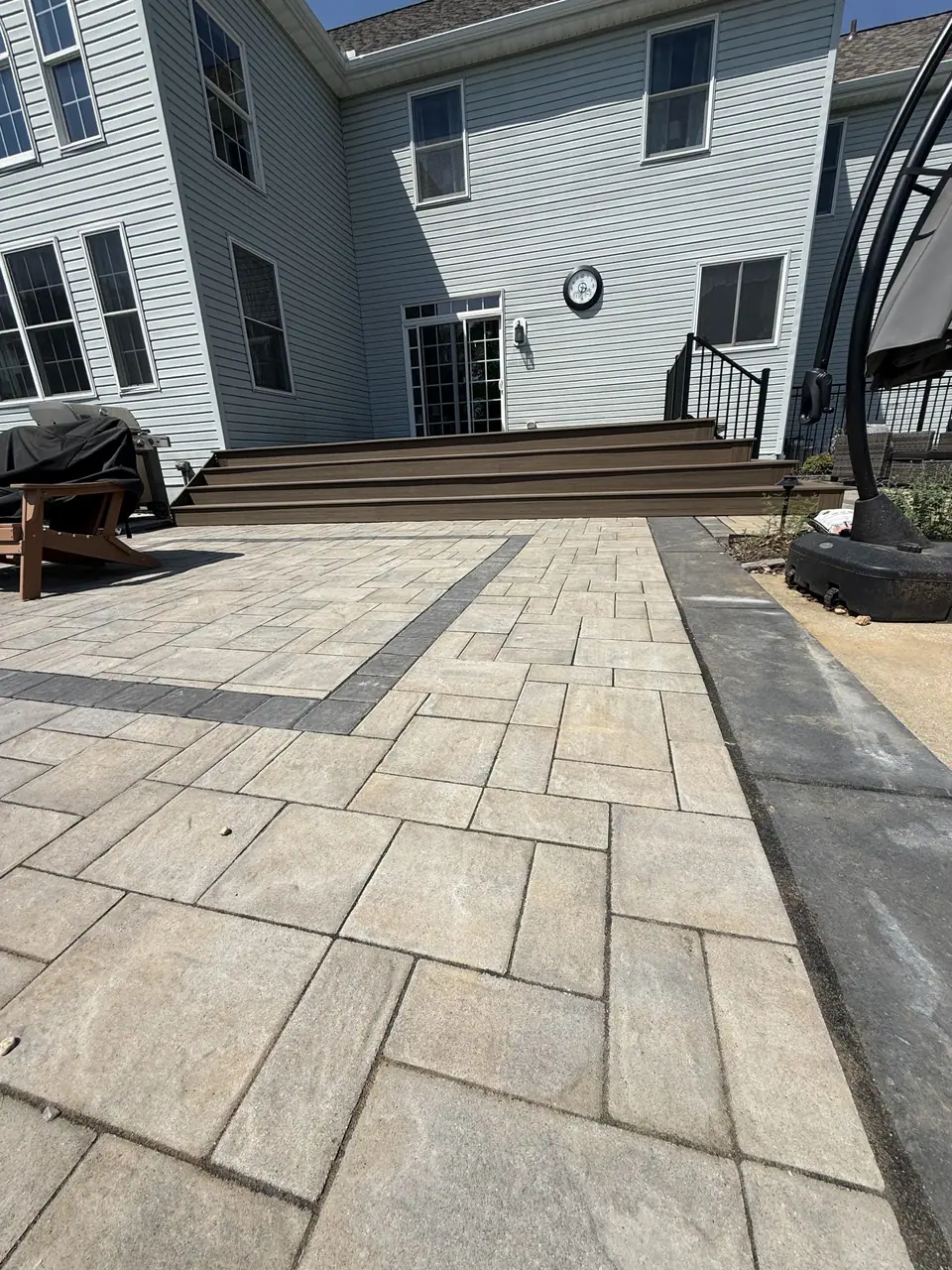
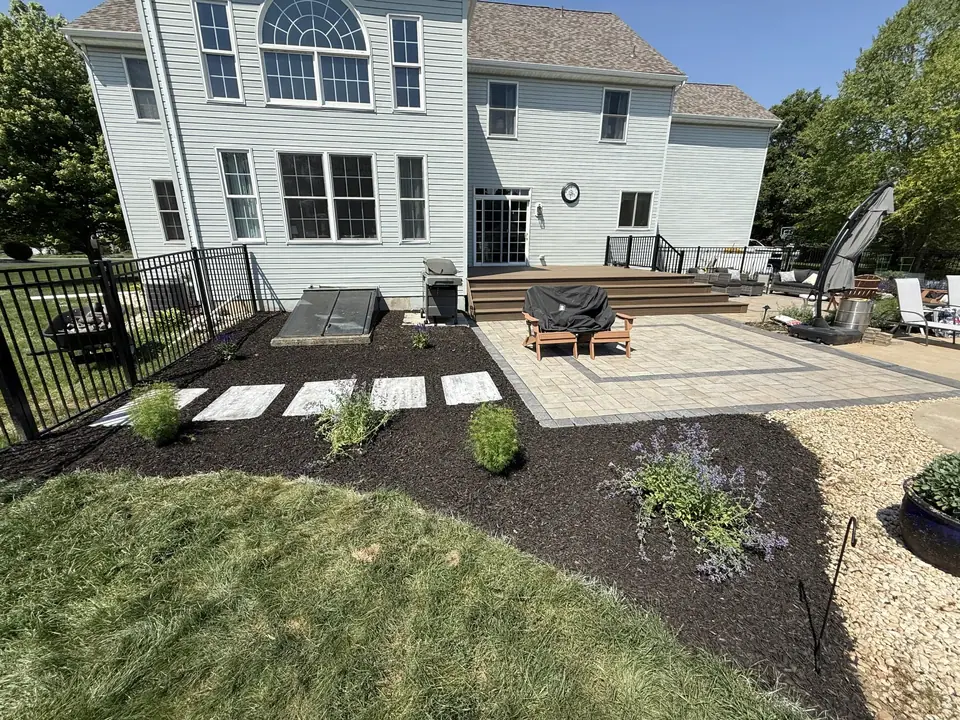
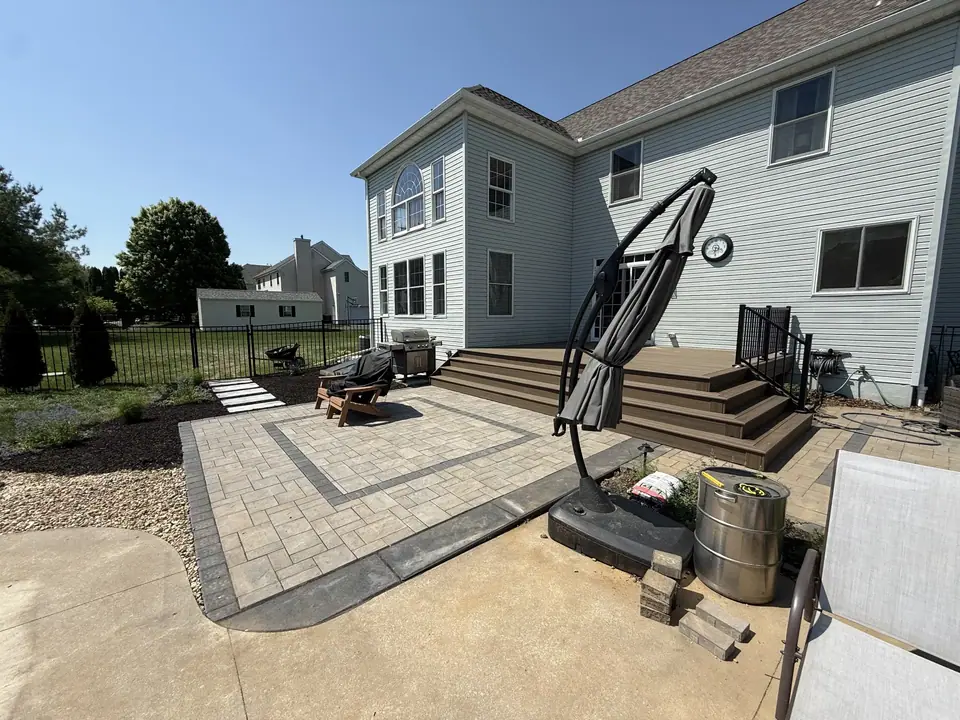
A paver patio is made from individual units arranged in a planned layout. Paver shapes, colors, and patterns can define borders or gathering areas, while the joints remain visible. Think about whether you prefer that detail or a more uninterrupted surface.
- Consider whether visible joints are part of the look you want.
- Picture how the patio meets a door, steps, or a path.
- Review material samples beside your home and landscape.
| Consideration | Concrete | Pavers |
|---|---|---|
| Appearance | Continuous; plain or stamped | Individual units and varied patterns |
| Layout | Often suits a unified shape | Can include patterns and borders |
| Joints | Fewer visible joints across the surface | Visible joints between units |
| Care to discuss | Cleaning and finish-specific guidance | Joint upkeep and product guidance |
Planning tip: The right comparison includes the proposed layout and installation plan, not just a material sample.
How do Pennsylvania conditions affect the choice?
Freeze-thaw conditions and snow make site preparation and water movement important topics for either surface. Ask how the design accounts for slope, drainage, and the patio’s connection to nearby structures. A useful answer should address your yard rather than assume one approach suits every property.
Humid summers, pollen, and falling leaves can leave residue on both materials. Leaves may gather at edges or in paver joints, so consider how you’ll keep the area clear. Summer insects can also influence where you place dining and seating areas, especially near planting beds.
- Ask where rainwater will flow and how the layout accounts for it.
- Discuss seasonal cleanup around trees, beds, and patio edges.
- Ask which cleaning methods suit the specific surface and finish.
- Consider how snow clearing fits the patio’s location and use.
| Yard feature | Question to raise |
|---|---|
| Slope or low areas | How will the design account for water movement? |
| Door or house connection | How will the patio meet the existing access point? |
| Trees and planting beds | Where might leaves collect along the edges? |
| Seasonal use | What care suits the selected material? |
Planning tip: Ask for site-specific recommendations about drainage and seasonal care.
Which surface fits your layout and style?
Concrete may fit your plans if you want a broad, unified area for a dining table, chairs, or a route between the house and yard. A stamped pattern can add detail, but the surface remains continuous. Ask to review the pattern at the scale of your proposed patio.
Pavers offer choices in unit shape and arrangement, which can help define a border or gathering area. If you’re considering a curved edge or a change in pattern, review how the full layout meets paths, planting, or a wall before construction.
- Mark where you expect to place furniture and how people will move around it.
- Identify the main route between the house, patio, and yard.
- Decide whether a border or pattern change matters to you.
- Ask how the proposed surface connects with nearby features.
| Your priority | What to compare |
|---|---|
| A unified appearance | A continuous concrete layout |
| Patterns or borders | Stamped concrete or paver arrangements |
| Defined areas | Surface patterns and patio layout |
| A landscape connection | Edges, paths, and planting transitions |
Planning tip: Plan around circulation, furniture, and transitions as well as the surface material.
What upkeep should you plan for?
Both surfaces need some routine care. Ask what routine cleaning the selected material calls for and what products or methods to avoid. The answer can vary with the specific finish and materials in your design.
For concrete, ask about care for the chosen finish, including a stamped surface. For pavers, ask what guidance applies to the joints and how to keep leaves and debris from collecting there. Keep product-care instructions so you can refer to them as the seasons change.
- What cleaning methods are suitable for this finish?
- What should you know about paver joints and seasonal debris?
- Which product-care instructions apply to the materials selected?
- How should you adjust routine cleanup during leaf and pollen seasons?
| Topic | What to clarify |
|---|---|
| Cleaning | Suitable methods and products to avoid |
| Concrete finish | Care instructions for the selected finish |
| Paver joints | Guidance for upkeep and debris |
Planning tip: Ask for guidance on the materials and finish included in your design.
What affects the scope of a patio project?
Material is one part of the project scope. The patio’s size and shape, site access, grading, drainage, steps, and connections to existing features can all affect the work involved. Ask for a detailed estimate that explains what is included so you can compare options on a similar basis.
A patio can also be planned with related features. LVMC offers attached, covered, open, and multilevel patio layouts, with options that include concrete, stamped concrete, pavers, and flagstone. Retaining walls or decorative sitting walls may also be part of the design. You can discuss landscape design or planting, mulch, and stone work as part of the overall setting.
- Ask what site preparation is included.
- Clarify how grading and water movement are addressed.
- Check how steps, walls, and transitions are handled in the scope.
- Ask which material and layout choices are included in the design.
| Project element | What to ask |
|---|---|
| Site preparation | What work is planned before installation? |
| Drainage | How will water movement be considered? |
| Edges and access | How will the patio meet the house or yard? |
| Added features | Are walls, seating, or other elements included? |
Planning tip: Explore patio construction options and ask how the proposed scope fits your yard.
Questions to ask a concrete patio builder
A useful discussion covers more than the surface color. Ask the concrete patio builder to explain site preparation, the proposed layout, drainage, and how the patio will meet nearby structures and landscape features. If you’re comparing designs, check that each describes a similar scope and finish.
For pavers, ask how the pattern, borders, edges, and joints are planned. For either choice, discuss care instructions and how the patio relates to future outdoor use, such as dining or cooking. If you’re considering related features, LVMC also offers outdoor kitchens, fire pits and fireplaces, and privacy screens.
- What surface, pattern, and finish are included?
- How will the site be prepared and drainage considered?
- How will the patio meet the house, steps, or nearby paths?
- What care guidance applies to the selected materials?
- Which walls, seating, or outdoor features are included in the scope?
| Decision | Concrete | Pavers |
|---|---|---|
| Finish | Plain or stamped | Unit color, shape, and pattern |
| Layout | Review shape and transitions | Review pattern, borders, and edges |
| Care | Get finish-specific instructions | Ask about joints and seasonal debris |
Planning tip: Compare the described scope and design details, not only the material names.
How patio planning with LVMC works
LVMC starts with a free, no-obligation consultation about your goals, space, and budget, followed by a detailed estimate. The design includes a 3D model and 2D floorplans, so you can review the proposed patio and discuss a concrete surface, stamped finish, or paver layout before construction.
LVMC handles permits and site preparation, then builds to the approved design and completes a final inspection before presenting the finished project. Permit and inspection requirements are set by your municipality; LVMC will talk through what applies, and you can confirm details with your township or borough. To start a conversation, use the project estimate request.
- Share how you plan to use the patio and what matters in your budget.
- Review the 3D model and 2D floorplans before construction.
- Discuss the surface, layout, site preparation, and related features.
| Stage | What it covers |
|---|---|
| Consultation | Discuss goals, space, and budget; receive a detailed estimate |
| Design | Review a 3D model and 2D floorplans |
| Preparation and construction | LVMC handles permits and site preparation, then builds to the approved design |
| Final inspection | Review the completed project |
Planning tip: The design review gives you a chance to discuss the proposed surface and layout before construction.
Frequently Asked Questions
Is a concrete patio or paver patio better for Pennsylvania?
There is no single right choice for every yard. Consider freeze-thaw conditions, snow, humid summers, and seasonal leaves alongside drainage and site preparation. Compare the appearance, joints, layout, and care guidance for each option. Ask how the proposed design responds to your specific yard rather than relying on a general rule.
Can a concrete patio have a decorative pattern?
Yes. A stamped concrete patio uses a pattern to create a more decorative finish than plain concrete. Ask to review the pattern and finish in relation to your patio’s shape and the surrounding landscape. Concrete remains a continuous surface even when the finish includes a stamped pattern.
What should I consider when choosing a paver patio?
Look at the paver shapes, colors, and arrangement together, rather than choosing from a sample alone. Consider whether you want a border, a change in pattern, or a connection to a path or wall. Ask how the layout will address the edges, joints, and transition to the house or yard.
What should I ask a concrete patio builder before work begins?
Ask what surface and finish are included, how the site will be prepared, and how drainage and connections to the house or paths are addressed. Clarify which features are included in the project scope and request care guidance for the selected material. Reviewing those details helps you understand what the proposed design covers.
Does LVMC install both concrete and paver patios?
LVMC lists patios made with concrete, stamped concrete, and pavers, along with other surface options. Patio layouts can be attached, covered, open, or multilevel, and may include retaining or decorative sitting walls. A consultation gives you a chance to discuss your goals, space, budget, and the materials that may fit your project.
Can I plan seating or cooking areas with a patio?
Yes. LVMC offers outdoor features such as decorative sitting walls, built-in and corner benches, outdoor kitchens, outdoor bars, and fire pits and fireplaces. Whether a feature suits the design depends on the layout and site. Bring up how you plan to use the area so the patio and related features can be considered together.