
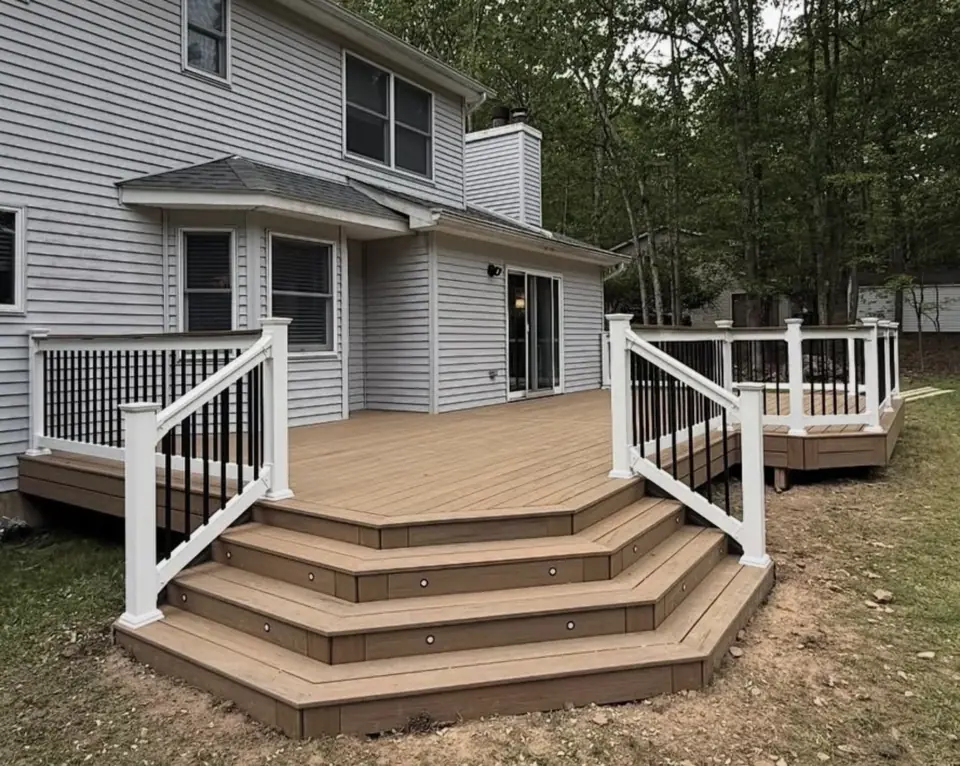
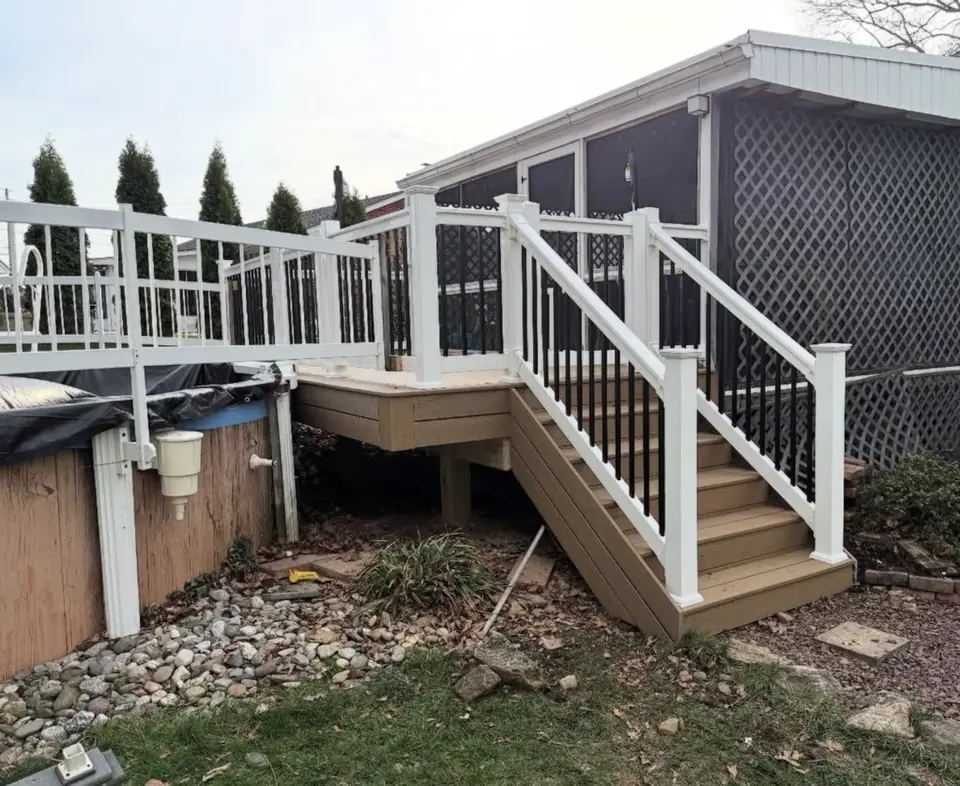
Deck Railing Options Compared: Composite, Vinyl, Aluminum, and Cable
Compare composite, vinyl, aluminum, and cable deck railing with practical guidance on views, upkeep, Pennsylvania seasons, design choices, and what to ask.
On this page
- Start with what you need the railing to do
- How the railing options compare
- Composite railing and vinyl railing
- Aluminum deck railing and cable railing
- Plan for Pennsylvania seasons and regular upkeep
- Match the railing to your deck layout
- Questions to ask before choosing a railing
- How railing planning with LVMC works
- Frequently Asked Questions
Choosing deck railing means balancing appearance, the view you want, and the care you are comfortable doing. Compare how each option fits your deck, stairs, and household before settling on a material.
Composite, vinyl, aluminum, and cable railing each have a distinct look. As you collect deck railing ideas, consider Pennsylvania’s freeze-thaw seasons, snow, humid summers, falling leaves, pollen, and insects—all of which can affect how you use and clean an outdoor space.
Start with what you need the railing to do
Before comparing samples, decide what matters most in your space. Railing defines the deck’s edge and changes how open or enclosed it feels. If you look out over a yard or another open area, sightlines may be a priority. If the deck faces a space where you want more separation, you may need to plan for screening in addition to railing.
Consider how people will move through the deck. Stairs, doors, seating, and any ramp access affect where railing goes and how it connects to other parts of the layout. If you are planning a new deck, include those details in the design conversation rather than treating railing as a last-minute choice.
- Which views do you want to keep open, and where would you prefer more screening?
- Who will use the deck regularly, including children, guests, or pets?
- Where are the doors, stairs, seating areas, and possible ramp access?
- Do you want railing to blend with the decking or create a visible contrast?
| Type | Visual character | What to consider |
|---|---|---|
| Composite | Coordinated or substantial appearance | Compare color and profile with the decking |
| Vinyl | Defined, consistent lines | Review available components and care instructions |
| Aluminum | Open appearance with slender profiles | Consider how much of the surrounding view you want to see |
| Cable | Minimal visual interruption | Ask about the specific system’s care and installation details |
Planning tip: LVMC installs composite, vinyl, aluminum, and cable railing. Explore deck railing installation.
How the railing options compare
There is no single material that fits every deck. Compare the look, care instructions, and product details for the specific railing under consideration. A material label alone will not tell you how a rail profile, finish, or connection will look with your decking and stairs.
Ask to review the proposed system as a whole, including the parts used at corners, stair transitions, and deck edges. Manufacturer guidance can vary by product, so do not assume that care or installation details for one system apply to another. Samples and a design model can help you judge combinations that are hard to picture from a small color chip.
- Compare actual samples beside your decking choice and the home’s exterior.
- Ask which components are included and how they fit the planned layout.
- Consider how the railing will look from inside the home as well as from the yard.
| Option | Look and view | Planning question |
|---|---|---|
| Composite | Can coordinate with decking or provide contrast | Which profiles and colors suit the overall design? |
| Vinyl | Creates a defined, consistent outline | What care instructions apply to this product? |
| Aluminum | Keeps the railing visually open | Which finish and profile fit the deck and stairs? |
| Cable | Keeps sightlines visually open | What system-specific care and installation details should I know? |
Planning tip: If you are considering composite boards, compare them with composite decking options as you choose railing.
Composite railing and vinyl railing
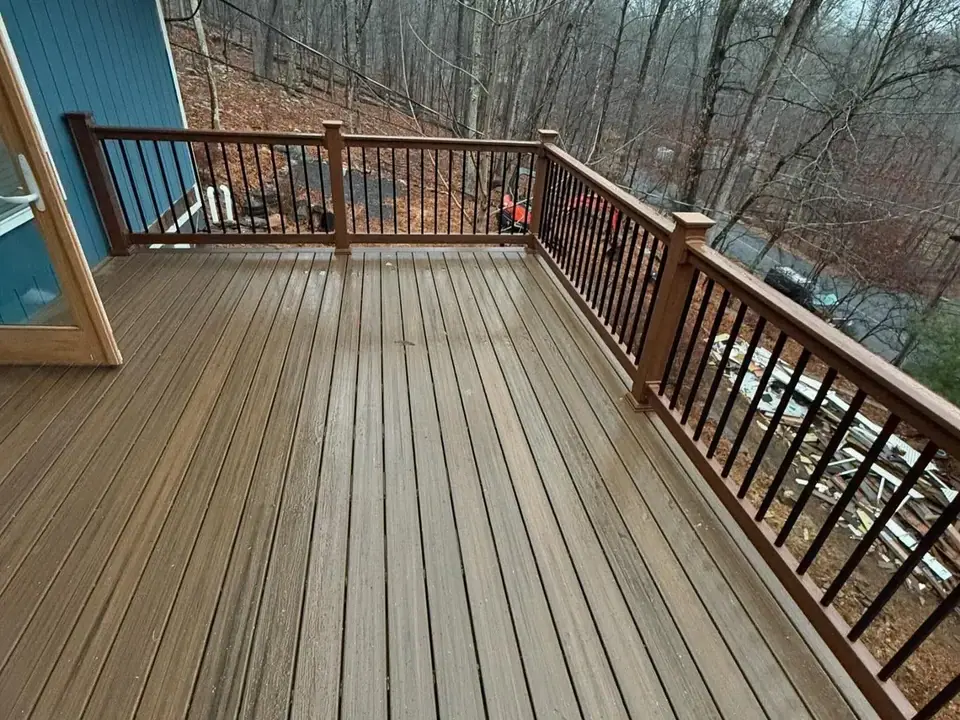
Composite railing may suit you if you want the railing to coordinate with composite decking or to add a contrasting color and profile. LVMC names Trex and Barrette Outdoor Living among its railing products. Ask which styles and components are available for your design, and review how they meet the deck edge, stairs, and any changes in direction.
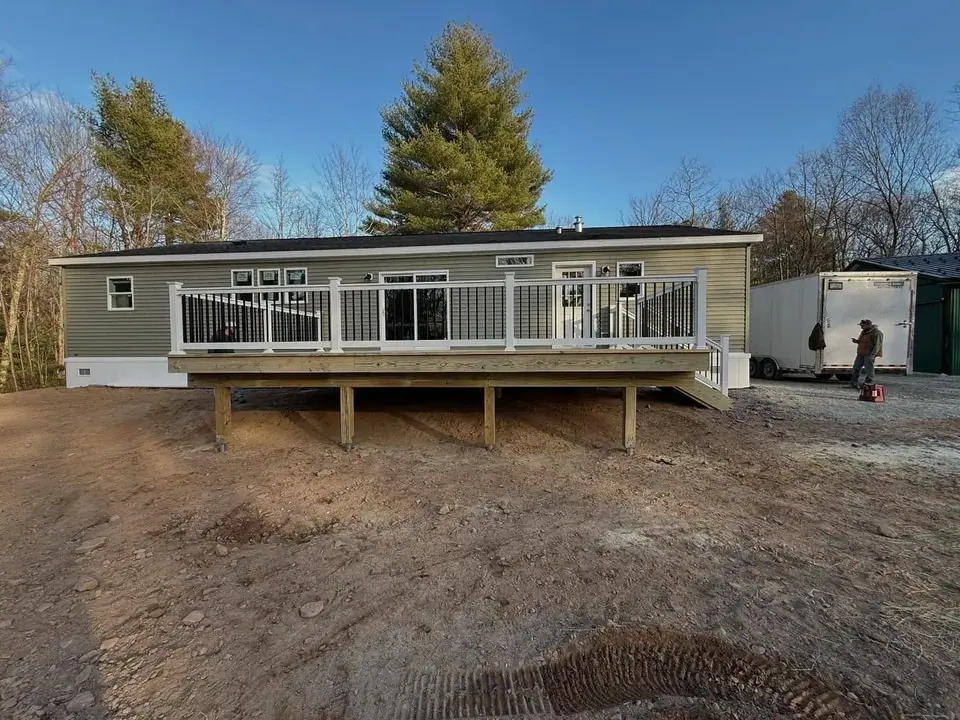
Vinyl railing offers another defined appearance. When comparing it with composite, look beyond product photos: check color choices, shapes, connection details, and manufacturer care guidance. Your preference may come down to whether you want the railing to blend into the deck or stand out as a separate design element.
For both materials, consider the full layout rather than one straight section. A color that looks appealing on a sample may read differently beside your deck boards or house exterior. Reviewing samples together can help you make a more informed choice.
- Ask whether the proposed components work with your selected decking and stair layout.
- Compare samples outdoors, where daylight and nearby colors affect how they appear.
- Review the manufacturer’s cleaning and care instructions before choosing.
| Question | Why it matters |
|---|---|
| Does the color coordinate with the deck boards? | A match can unify the design; contrast can make the railing a feature. |
| Are stair and transition components available? | The layout should work as a complete system. |
| What care does the manufacturer recommend? | You can compare upkeep expectations before selecting. |
Planning tip: See how composite decking choices could pair with your railing selection.
Aluminum deck railing and cable railing
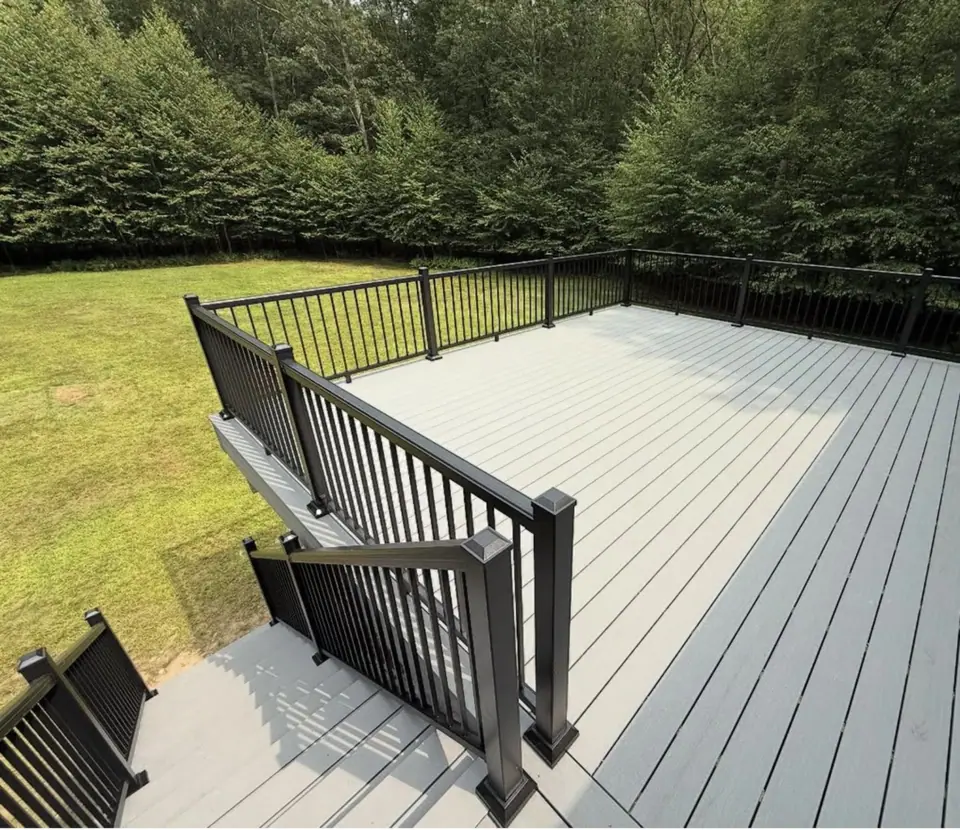
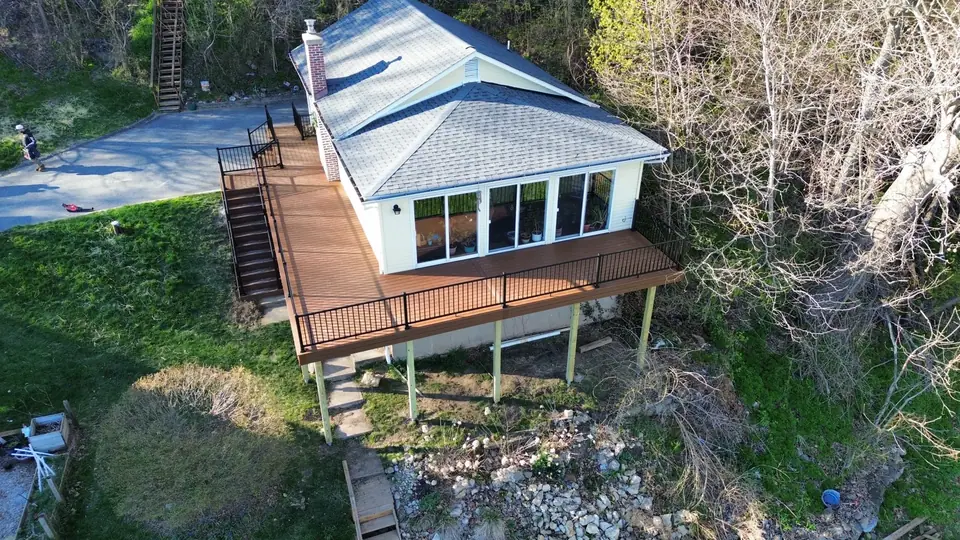
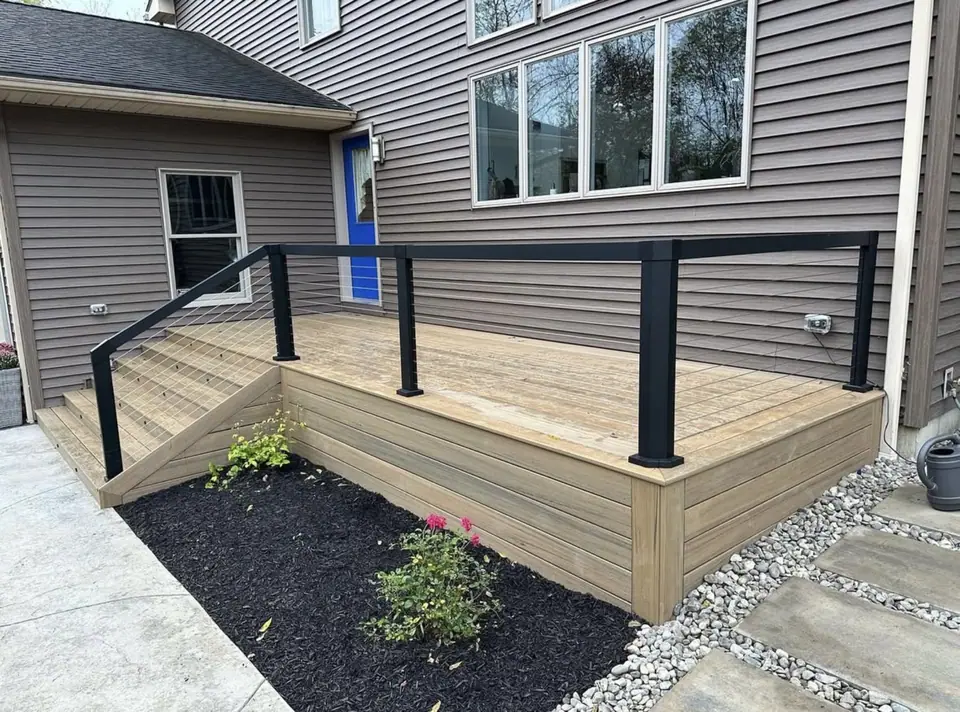
Aluminum deck railing is worth considering if you want an open appearance and sightlines through the railing. Its profile can provide contrast against wood or composite decking without making the railing the main visual feature. Compare finishes and profiles with your deck plan, especially where stairs or corners change direction.
Cable railing is another option when keeping the view visually open matters. The cable lines remain part of the design, so consider how they look from several viewpoints—not only when you are standing on the deck. Ask how the proposed system works with your layout and what care its manufacturer recommends.
Both options have product-specific details. A railing shown in an inspiration photo may not be the same system, or suit the same layout, as the one being considered for your deck. Ask the installer to explain the proposed components and how the system connects at stairs, corners, and other transitions.
- For aluminum, compare the finish, profile, and way the railing frames the view.
- For cable, ask about cleaning and any system-specific maintenance instructions.
- For either option, review corners and stair transitions as part of the complete design.
| Choice | May suit you if | Ask before choosing |
|---|---|---|
| Aluminum | You prefer an open railing appearance | Which finish and profile fit the deck and home? |
| Cable | You want to keep sightlines visually open | What care and installation details apply to this system? |
Planning tip: A deck design consultation can bring railing, decking, stairs, and access into one plan.
Plan for Pennsylvania seasons and regular upkeep
Pennsylvania’s changing seasons are worth considering when you choose an outdoor railing. Freeze-thaw conditions, snow, humid summers, pollen, falling leaves, and insects can affect how you use and care for the deck. Debris may collect around posts, rail edges, stairs, and nearby planting, so consider whether those spots will be easy to reach when cleaning.
Do not choose based on a broad claim that a material needs no attention. Finishes and care instructions differ among products, and outdoor railing benefits from routine cleaning and checking. Ask what methods the manufacturer recommends and whether the selected system has parts that need periodic attention.
If lighting is part of your plan, decide where it belongs while you are discussing the railing layout. Post cap and rail lights, for example, can be considered alongside the railing rather than added without regard to the design. You can discuss deck lighting installation as part of the larger project.
- Ask which cleaning products and methods the manufacturer recommends.
- Consider where leaves and pollen may gather and how you will clear them.
- Include railing and its connections in your regular outdoor-space checks.
- Discuss lighting placement before construction if you want rail or post-cap lights.
| Condition | Planning question |
|---|---|
| Snow and freeze-thaw | What care does the manufacturer recommend through changing seasons? |
| Leaves and pollen | Are rails, stairs, and corners straightforward to clean? |
| Humid summers and insects | What routine cleaning or checking does the product guidance describe? |
Planning tip: Plan lighting and railing together so you can consider both the appearance and access for cleaning.
Match the railing to your deck layout
Railing is one part of the deck’s overall design. The decking color, house exterior, stairs, skirting, and lighting all affect how the finished space looks. A contrasting rail can outline the deck, while a closer color match can make the elements feel more continuous. Samples or a design model are more useful than choosing from descriptions alone.
Think about the views you care about from the places you use most: a kitchen window, a seating area, the yard, or the top of the stairs. If privacy matters, compare railing with a separate privacy screen or wall rather than expecting railing alone to provide screening.
If your plan includes ramp access, bring that into the railing discussion early. The ramp’s connection to the deck and the way people move between outdoor areas affect the overall layout. LVMC builds accessible ramps designed to connect with a deck; you can review accessible ramp options alongside the railing plan.
- Bring photos of the home exterior and deck area to the design discussion.
- Point out the views you want to preserve and the areas where privacy matters.
- Review stairs, ramp access, lighting, and skirting in the same layout.
- Ask how the railing will look from inside and outside the home.
| Element | Decision |
|---|---|
| Decking and railing | Should the colors blend or contrast? |
| View and privacy | Where should the edge stay open, and where might screening help? |
| Stairs and ramp | How should the railing continue through each transition? |
Planning tip: Review residential decking options as part of the complete layout.
Questions to ask before choosing a railing
A useful conversation covers the exact product, not just the material category. Ask to see the proposed profile and finish, and confirm which components are part of the design. If a detail is not clear in a drawing or proposal, ask how it will look at corners, stairs, and transitions before making your selection.
You can also ask how the railing coordinates with decking, lighting, skirting, and access. Getting those choices into the same discussion can help you compare the complete design instead of deciding on each part in isolation.
- Which specific railing product, profile, finish, and components are proposed?
- How will the railing connect at stairs, corners, and deck transitions?
- What care instructions does the manufacturer provide?
- How will the railing coordinate with decking, lighting, skirting, and access?
- Can I review the selected materials together in the design?
| Check | What to look for |
|---|---|
| Product | Material, profile, finish, and compatible components |
| Layout | Stairs, corners, access, and transitions shown in the plan |
| Care | Manufacturer guidance for cleaning and routine attention |
| Coordination | Railing considered alongside decking and other planned features |
Planning tip: Use these questions when discussing deck installation.
How railing planning with LVMC works
LVMC Decks is family-owned and operated by Norm Boell. His son Blaize is the sales associate and project supervisor, and his younger son Roman leads the crew. The Boells personally manage and build each project, leading three crews.
The process starts with a free, no-obligation consultation about your goals, space, and budget, along with a detailed estimate. LVMC then prepares a custom design with a 3D model and 2D floorplans so you can consider how the railing, decking, stairs, and access fit together before construction.
LVMC handles permits and site preparation; permit requirements are set by your municipality, and you can confirm what applies with your township or borough. The work then proceeds through foundation and structural framing to construction according to the approved design, followed by a final inspection before LVMC presents the finished build. You can request a detailed estimate.
- Bring photos or notes that show the views and access you want to preserve.
- Ask to review your railing choice in the 3D model and floorplans.
- Discuss how the selected materials work with the full deck layout.
| Stage | What to discuss |
|---|---|
| Consultation | Goals, space, budget, and railing preferences |
| Design | Materials, sightlines, stairs, and access |
| Construction | Work completed to the approved design |
| Final inspection | Review before the finished build is presented |
Planning tip: Bring your material preferences and questions to the deck planning conversation.
Frequently Asked Questions
Which deck railing material gives the most open view?
Aluminum and cable railing are both options to consider if you want an open appearance. The view depends on the specific profile, layout, and surroundings, so compare the proposed system from the deck and from the yard. Ask to see how it fits your design, including at stairs and corners, rather than relying on an inspiration photo of a different product.
Is composite railing a good match for composite decking?
It can be a good match if you want the deck and railing to coordinate, but matching colors is not the only approach. Some homeowners prefer contrast between the boards and rails. Compare samples together and ask which components suit your selected decking, stairs, and layout. LVMC names Trex among its railing products.
What should I know about vinyl railing upkeep?
Care instructions vary by product, so check the manufacturer’s guidance for the specific vinyl railing you are considering. Ask which cleaning methods are recommended and what routine checks are appropriate for the rails and connections. Leaves, pollen, and other outdoor debris may collect around deck details, so consider whether those areas are easy for you to reach.
Does cable railing need special maintenance?
Cable railing has system-specific care and installation details. Ask the manufacturer or installer how to clean the cables and what routine attention the system calls for. Also discuss corners, stairs, and transitions as part of the design. Do not assume that guidance for one cable product applies to another; review the instructions for the system proposed for your deck.
Can railing be planned with stairs, lighting, or ramp access?
Yes. Consider railing alongside stairs, lighting, and any ramp access so those features work together in the design. Tell the designer where people enter, which views you want to preserve, and how you expect to use the space. LVMC creates a 3D model and 2D floorplans for homeowners to review before construction.
How do I choose between aluminum and cable railing?
Compare the appearance of the specific profiles, how much visual interruption you prefer, and the care instructions for each product. Consider how the railing looks from inside the home and from the yard, as well as how it meets stairs and corners. Ask to review samples or the proposed products alongside your decking so you can judge the overall combination.