What Happens During a Deck Rebuild and Replacement?
What happens during a deck rebuild? Learn each step from inspection to construction, permits, and timelines for a smooth replacement project.
On this page
When your deck has reached the point where repairs no longer make sense, a full rebuild is the next logical step. Whether the framing has rotted out, the foundation has shifted, or the structure simply can’t meet modern safety codes, a deck rebuild and replacement gives you a fresh start with better materials, smarter design, and construction built to last. For homeowners dealing with Pennsylvania’s tough seasonal climate, understanding what the process actually looks like from start to finish helps you plan with confidence and avoid surprises along the way.
Evaluating Your Existing Deck
Every project starts with a thorough evaluation of what’s currently there. Your contractor will inspect the framing, footings, ledger board connection, posts, beams, and joists to determine the full extent of the damage. Sometimes what looks like a surface problem turns out to be a structural issue, and other times a deck that looks terrible on top still has a solid foundation underneath.
This assessment drives the entire scope of the project. In some cases, portions of the existing substructure can be saved and incorporated into the new build, which reduces cost and construction time. In others, everything needs to come down to the footings. An honest evaluation at this stage is what separates a quality deck rebuild and replacement from a project that cuts corners and creates problems down the road.
Design and Planning
Once the evaluation is complete, the design phase begins. This is your opportunity to rethink everything about your outdoor space. Maybe your old deck was too small, poorly laid out, or missing features you’ve always wanted. A deck rebuild and replacement lets you start from scratch with a layout tailored to how you actually use your backyard today.
Your contractor will work with you on size, shape, material selection, railing style, lighting, stairs, and any special features like built-in seating or multi-level platforms. They’ll also discuss how the new deck connects to your home and how it handles Pennsylvania’s freeze-thaw cycles, heavy snow, and seasonal moisture. Design decisions made now shape every aspect of the finished product.
Permits and Code Compliance
Any deck rebuild and replacement in the area requires permits and compliance with local building codes. These codes exist to keep your deck safe and structurally sound, covering everything from footing depth and joist spacing to railing height and ledger board attachment. Your project may also need to meet updated codes that weren’t in effect when your original deck was built.
A reputable contractor handles the entire permitting process, submitting plans, scheduling inspections, and making sure every aspect of the build meets current requirements. This protects your investment and prevents headaches if you decide to sell your home down the road.
Demolition and Removal
Before anything new goes up, the old deck has to come down. Demolition involves carefully dismantling the existing structure, removing decking boards, railings, framing, and footings as needed. Your contractor should handle debris removal and disposal as part of the project, leaving the site clean and ready for new construction.
Demolition also reveals the true condition of the ledger board and the house connection, which is one of the most critical structural points on any deck. If moisture damage or rot has affected the rim joist or siding behind the old ledger, those issues need to be addressed before the new build begins. Skipping this step is one of the most common mistakes in a deck rebuild and replacement project.
Foundation and Framing
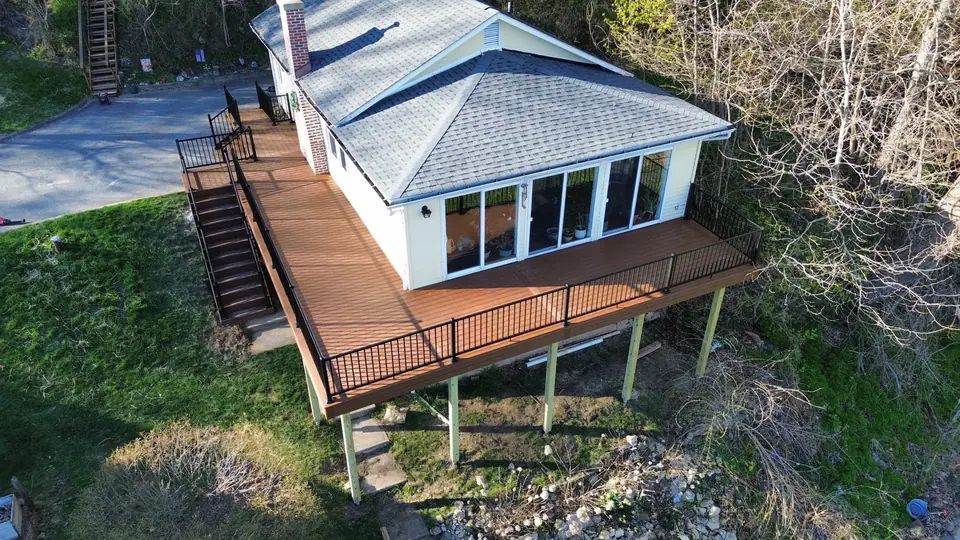
With the old structure removed, new construction starts from the ground up. Footings are dug below the frost line, which sits deep enough to protect against Pennsylvania’s freeze-thaw cycles. Concrete piers are poured, posts are set, and the beam and joist system is built to support the new deck’s specific dimensions and load requirements.
The ledger board is attached to the house with proper flashing and fasteners to create a watertight connection that prevents moisture from reaching the wall behind it. Every framing member is sized and spaced according to the engineering plan, with hardware rated for the loads involved. This is the stage where the quality of your contractor matters most, because solid framing is what keeps your deck safe and stable for decades.
Decking, Railings, and Finishing
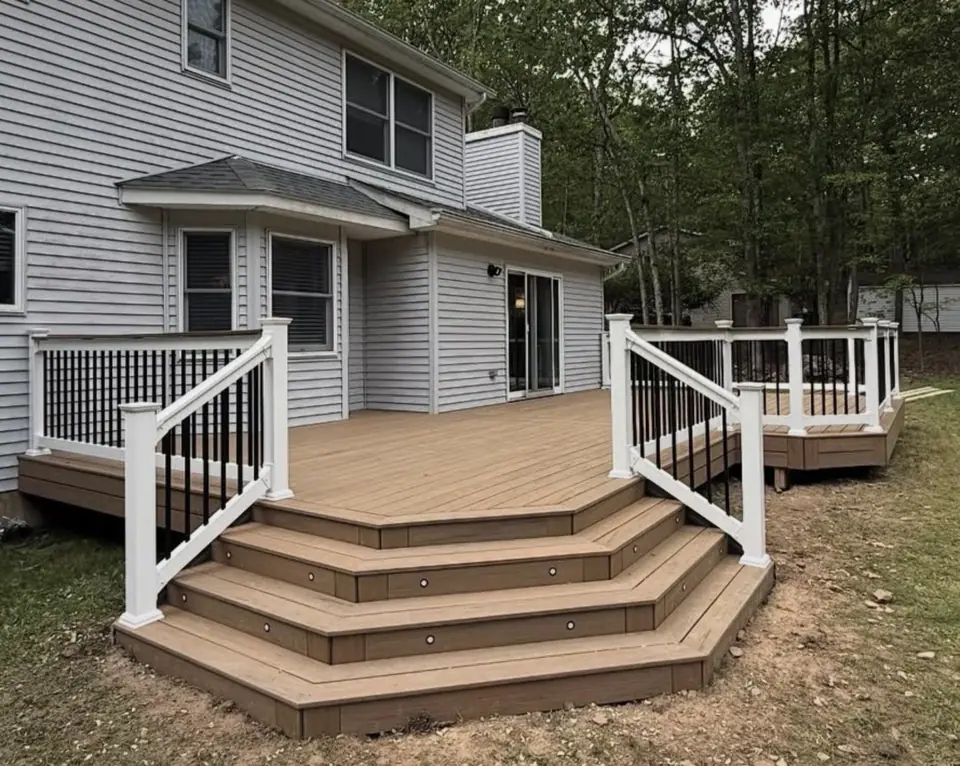
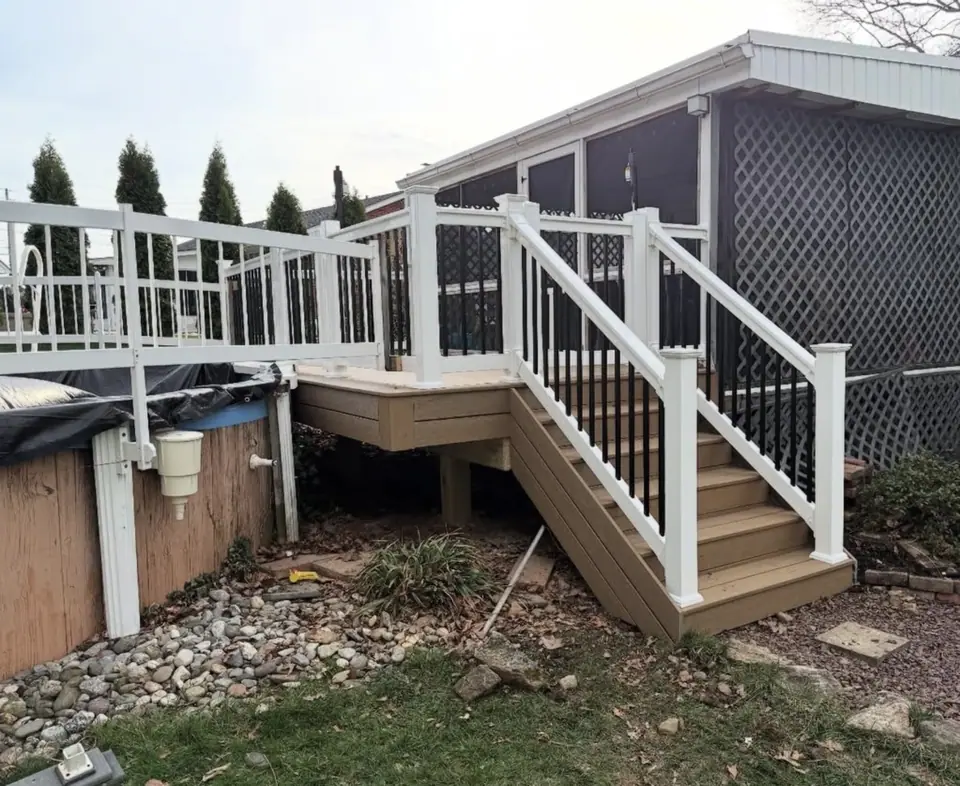
Once the framing is complete and inspected, the visible elements go on. Decking boards are installed with proper spacing for drainage and thermal expansion, followed by railings, stairs, and any trim or fascia that finishes the structure. Lighting, post caps, and other accessories are added as the final touches that complete the look.
This is the stage where your deck rebuild and replacement starts to feel real. The design choices you made weeks earlier come together into a finished outdoor space that looks, feels, and performs exactly the way you envisioned. Premium materials like composite and PVC deliver a polished appearance that holds up to Pennsylvania’s weather without the maintenance demands of traditional wood.
Timeline and What to Expect
Most residential deck rebuilds take anywhere from one to four weeks depending on size, complexity, weather, and permitting timelines. Your contractor should provide a realistic schedule upfront and keep you informed throughout the process. Weather delays are common in Pennsylvania, especially during spring and fall, so building some flexibility into your timeline helps manage expectations.
Communication matters throughout the project. A trustworthy contractor keeps you updated on progress, flags any unexpected issues as they arise, and makes sure you’re comfortable with decisions before moving forward. A well-managed deck rebuild and replacement should feel organized and transparent from demolition through final walkthrough.
Choosing the Right Contractor
The contractor you hire determines the quality, safety, and longevity of your new deck. Look for a licensed, insured builder with proven experience in full rebuilds, not just surface-level repairs. Ask for photos of completed projects, check reviews, and make sure they understand Pennsylvania’s climate, codes, and material performance.
At LVMC Decks, we help homeowners through every stage of a deck rebuild and replacement, from evaluation and design to construction and finishing touches. Our team builds every deck to handle Pennsylvania’s toughest seasons with precision and care. Call us today at (267) 301-7047 to schedule a consultation and get started.