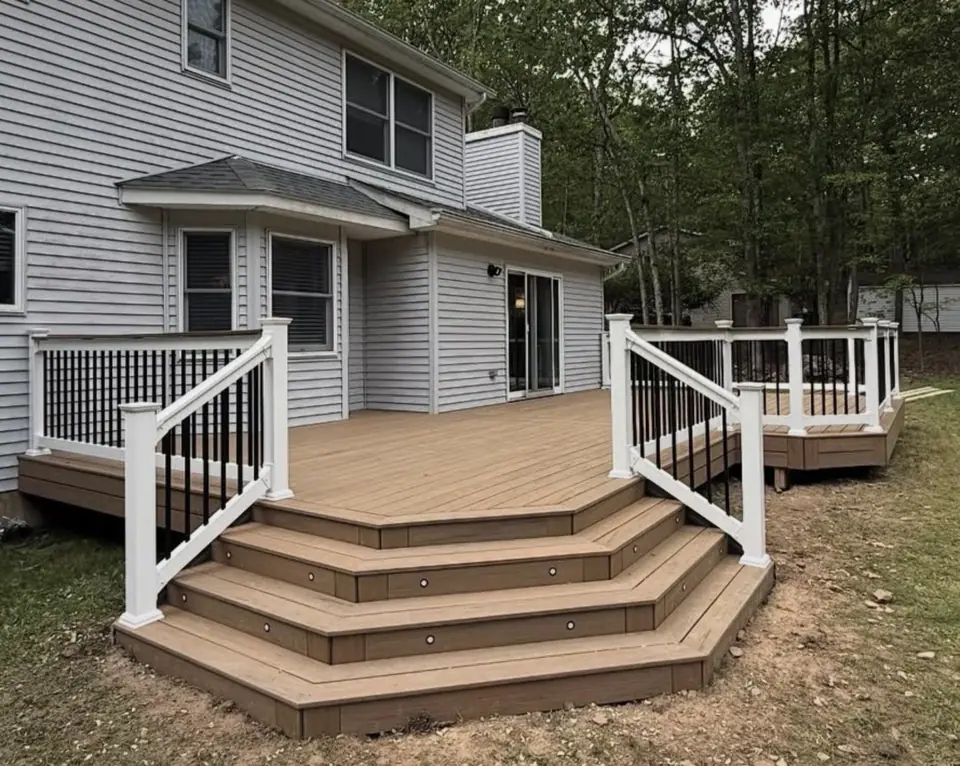
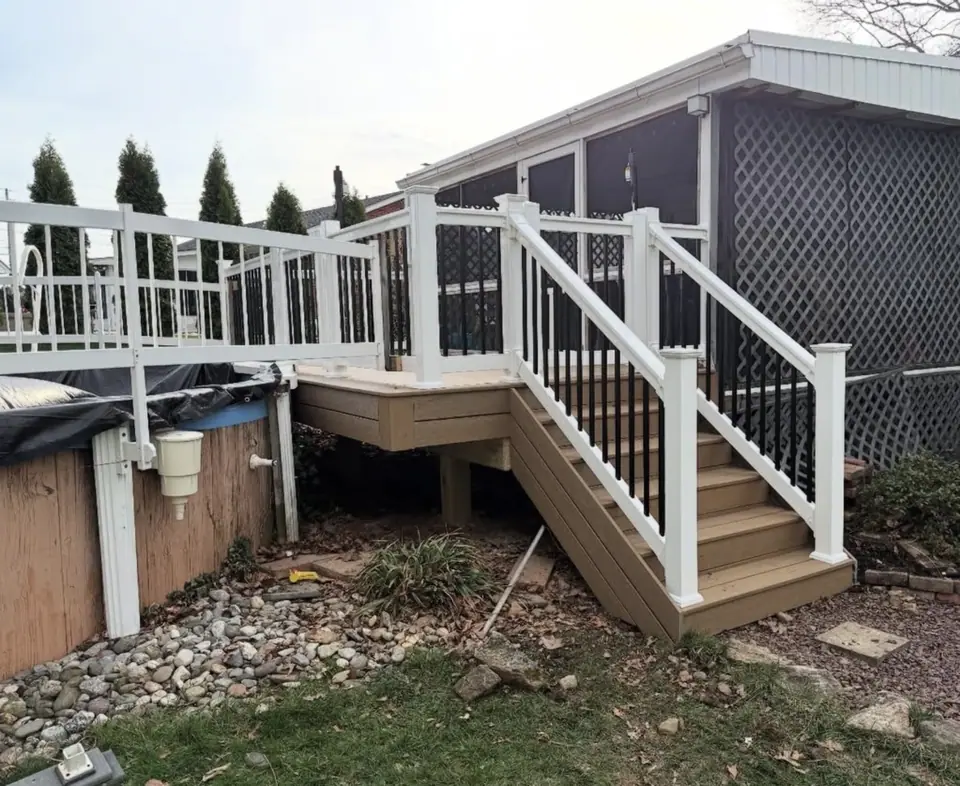
Best Hardwood Species Recommended by a Hardwood Deck Builder
Explore the best hardwood decking options, including Ipe, Tigerwood, and Cumaru, known for durability, beauty, and long-term performance.
On this page
Hardwood is the material homeowners reach for when they want a deck that looks like nothing else. The deep grain, the natural color, and the sheer density set it apart from composite and pressure-treated lumber. But not every hardwood belongs on a Pennsylvania deck, and the right species depends on how it handles warm summers, cold snowy winters, and the freeze-thaw swing in between. A hardwood deck builder who works in this climate narrows the field to the species that actually perform here. These are the three worth knowing.
Why Hardwood in the First Place
Before the species, it helps to understand what hardwood brings that other materials do not. Tropical hardwoods are extraordinarily dense, which makes them naturally resistant to rot, insects, and the wear that softer woods show within a few seasons. They hold up to heavy foot traffic without denting, they resist moisture in a climate that swings from humid summers to snow-covered winters, and they carry a richness of grain and color that composite imitates but never quite matches. The trade is that hardwood is a premium material and rewards being installed by someone who knows how to work it.
Ipe
Ipe is the benchmark tropical hardwood and the one most people picture when they think premium decking. It is remarkably dense, so dense that it resists rot, insects, and decay with almost no help, and it carries a deep brown color with fine grain that reads as high-end from the first board. In a Pennsylvania climate, Ipe earns its reputation by shrugging off moisture, freeze-thaw movement, and years of foot traffic while holding its structure. It is the species to ask a hardwood deck builder about when longevity and a rich, formal look are the priorities. Ipe tends to be the most durable of the common hardwood choices, and it is priced accordingly, which is part of why professional installation protects the investment.
Tigerwood
Tigerwood is the species for a homeowner who wants the deck itself to be the visual statement. Its name comes from the dramatic dark streaking that runs through a warm reddish-brown base, giving each board a distinctive striped character that no two decks share exactly. Beyond the looks, Tigerwood brings the same tropical-hardwood density that resists rot, insects, and weather, so it performs through Pennsylvania seasons while standing out visually. It is the choice a hardwood deck builder points to when a client wants warmth and bold grain rather than the more uniform tone of Ipe. Like all these species, it holds its character best when installed and finished correctly.
Cumaru
Cumaru, sometimes called Brazilian teak, is the species that balances premium hardwood performance with a slightly friendlier price than Ipe. It is dense and durable, resisting rot, decay, and insects the way the other tropical hardwoods do, and it carries a warm reddish-brown to golden-brown tone with a flowing grain that suits a lot of home styles. Cumaru handles the moisture and temperature swings of a Pennsylvania climate well, which makes it a strong option for a homeowner who wants genuine tropical hardwood without stepping all the way up to Ipe pricing. A hardwood deck builder often recommends it as the value choice within the premium tier.
How to Choose Between Them
The decision usually comes down to look, budget, and how much of a statement you want the deck to make. Ipe is the most durable and the most formal, with the deepest uniform brown and the highest price. Tigerwood is the showpiece, chosen for its dramatic streaking when the deck itself should draw the eye. Cumaru is the balanced pick, delivering tropical hardwood performance at a more approachable cost. All three resist rot, insects, and weather far better than softwoods and suit the Pennsylvania climate when installed properly. The right one matches your eye and your budget, which is a conversation worth having with the builder before anything is ordered.
Why the Builder Matters as Much as the Wood
Hardwood is unforgiving of poor installation. Its density means it calls for the right fasteners, proper spacing for movement, careful drilling, and an understanding of how the wood behaves as it weathers. A deck built from beautiful Ipe or Tigerwood by someone who does not know the material can cup, split, or gap. The species gives you the potential, but the builder is what turns that potential into a deck that lasts decades. That is why choosing an experienced hardwood deck builder matters as much as choosing the wood itself.
Start With a Design Conversation
If a hardwood deck is what you have in mind, the first step is talking through the species, the look, and the budget with someone who builds them in this climate, then seeing the design before anything is ordered. Call LVMC Decks at +1 267 301 7047 or visit 138 N New St, Nazareth, PA 18064 for a free consultation.